Commercial Warehousing and Distribution Noida 7 Benefits for Growing Businesses
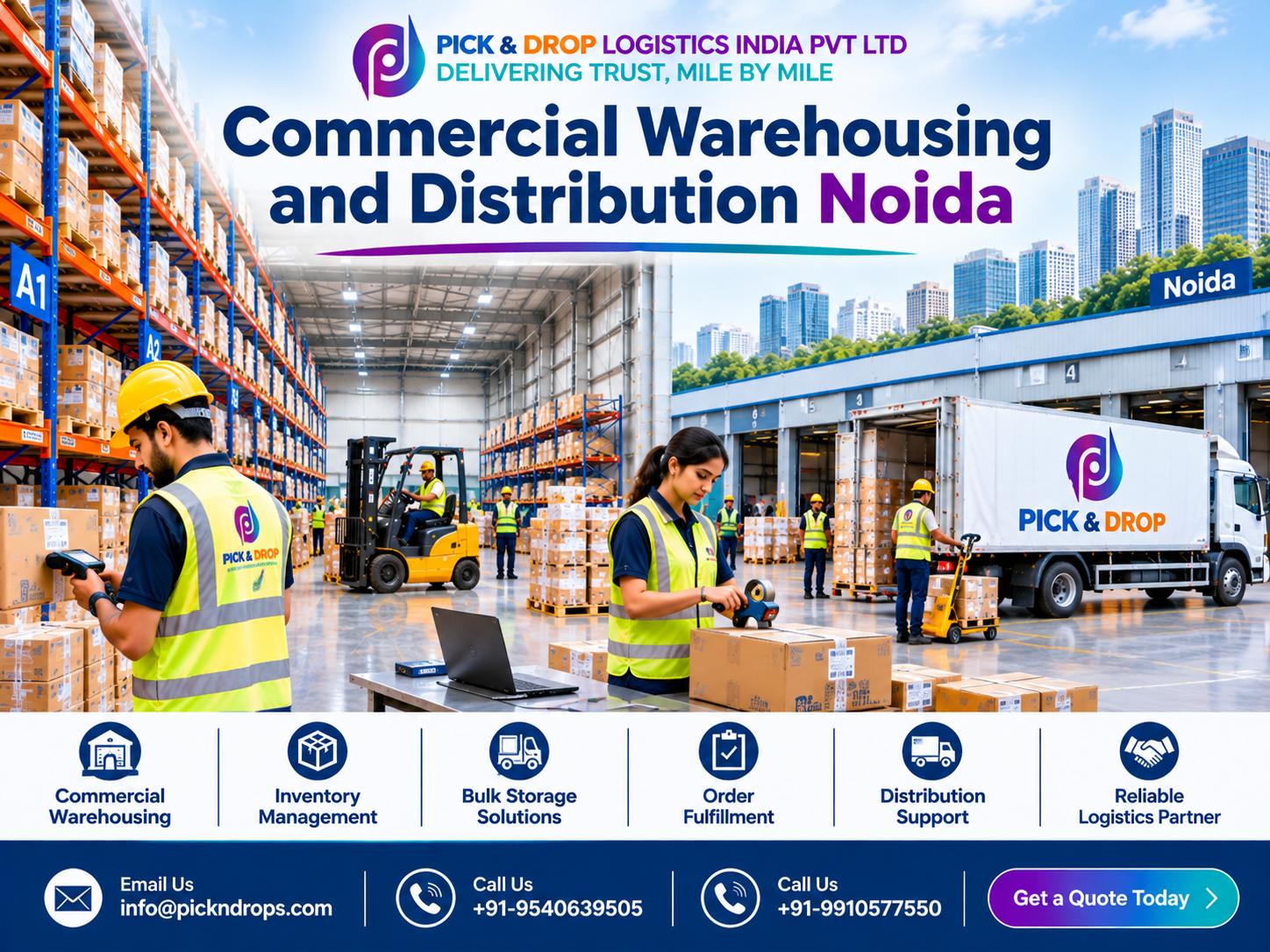
Every growing business needs a systematic approach to storing its products, managing its inventory, and distributing goods. As business operations grow, handling all these functions in-house becomes increasingly difficult.
Here comes the role of commercial warehousing and distribution Noida. Warehousing and distribution services by professionals help the business to manage its products from receiving through storage and order processing till the delivery.
If you run a manufacturing business, wholesale business, a retail business, or any e-commerce firm, the best solution to your commercial warehousing needs can help you.
What Is Commercial Warehousing and Distribution?
Commercial warehousing and distribution refers to the storage, management and movement of goods for business purposes. It connects warehouse operations with the processes required to prepare and distribute products to customers, retailers, distributors and other business destinations.
Depending on the logistics provider, services may include:
-
Commercial goods receiving
-
Product and inventory storage
-
Stock management
-
Warehouse handling
-
Picking and packing
-
Order fulfillment
-
Dispatch preparation
-
Distribution coordination
-
Loading and unloading
These activities help create a structured process for managing commercial inventory and moving products through the supply chain.
7 Benefits of Commercial Warehousing and Distribution in Noida
1. Organized Storage for Commercial Inventory
Businesses handling large quantities of products need a systematic storage arrangement. Disorganized inventory can make product identification, stock movement and order preparation more difficult.
Professional commercial warehousing provides designated storage areas and organized inventory processes. Products can be arranged according to their categories, sizes, handling requirements and storage needs.
This can help businesses maintain better control over their inventory while making warehouse operations more manageable.
2. Improved Inventory Management
Inventory management plays a major role in business operations. Companies need to understand how much stock is available, which products are moving and when inventory needs replenishment.
A professional warehouse operation can support processes such as:
-
Recording incoming inventory
-
Organizing stock locations
-
Monitoring stock movement
-
Identifying products
-
Managing outgoing shipments
-
Maintaining inventory records
Depending on the provider's systems, businesses may also receive stock reports and digital inventory visibility.
Better inventory organization can support informed business decisions and reduce unnecessary operational confusion.
3. Efficient Order Processing and Fulfillment
Businesses that receive regular orders need a dependable process for preparing products for dispatch.
Commercial warehousing can connect stored inventory with order fulfillment activities. Once an order is received, the required products can be located, picked, packed and prepared for shipment.
A structured fulfillment process can be particularly valuable for:
-
Wholesale orders
-
Retail replenishment
-
E-commerce shipments
-
B2B product orders
-
Distributor requirements
Efficient order preparation helps create a smoother connection between warehouse inventory and customer requirements.
4. Smoother Distribution Across Business Markets
Warehousing and distribution work best when they are properly coordinated.
After products are stored and prepared, they need to move to their intended destinations. A distribution arrangement can help businesses coordinate dispatches to retailers, distributors, commercial customers and other locations.
For businesses operating in Noida and the wider Delhi NCR region, an appropriately selected warehouse location can support their regional logistics requirements.
The most suitable distribution setup depends on customer locations, transportation routes, shipment volumes and delivery requirements.
5. Flexible Storage for Changing Business Requirements
Inventory requirements are rarely constant throughout the year. Businesses may experience seasonal demand, product launches, promotional periods and changing order volumes.
Flexible commercial warehousing can help companies adjust their storage arrangements according to operational requirements.
For example, a growing business may need additional space during a busy sales period and a different storage arrangement when inventory levels change.
Businesses should discuss available space, contract terms, handling charges and flexibility with their warehouse provider before selecting a solution.
6. Reduced Warehouse Management Workload
Managing a commercial warehouse internally requires space, staff, handling equipment, inventory procedures and ongoing supervision.
Outsourcing selected warehousing and distribution activities can help businesses reduce some of this operational workload.
A logistics partner may manage agreed activities such as receiving goods, organizing inventory, preparing orders and coordinating dispatches.
This allows business teams to spend more time on sales, customer relationships, marketing, product development and other important activities.
7. Better Coordination Across the Supply Chain
A well-managed supply chain depends on the smooth movement of products between different operational stages.
Commercial warehousing and distribution can bring several activities together:
Goods Receiving → Storage → Inventory Management → Order Processing → Picking and Packing → Dispatch → Distribution
A connected process can improve coordination between inventory storage and product movement.
This is especially useful for businesses that handle regular shipments, multiple product categories or distribution across different markets.
Which Businesses Need Commercial Warehousing Services in Noida?
Commercial warehousing and distribution can support many types of businesses with storage and product movement requirements.
Manufacturers
Manufacturers may need storage for raw materials, components, packaging supplies and finished products before distribution.
Wholesalers and Distributors
Wholesale businesses often manage multiple product categories and regular bulk orders. Organized warehouse storage can support stock management and order preparation.
Retail Businesses
Retail companies may require warehouse space for inventory consolidation, stock replenishment and distribution to retail outlets.
E-commerce Companies
Online sellers need organized inventory storage and order fulfillment processes to prepare customer shipments.
FMCG Businesses
Fast-moving consumer goods companies may require systematic stock handling, inventory monitoring and distribution coordination.
Importers and Exporters
Businesses involved in international trade may need commercial storage and coordinated movement of goods as part of their logistics operations.
What Services Should You Expect From a Commercial Warehouse?
Before selecting a provider for Commercial Warehousing and Distribution Noida, understand the services included in the arrangement.
Goods Receiving and Storage
Incoming products are received and placed in designated storage areas according to their handling and storage requirements.
Inventory Management
Stock records and inventory movement processes help businesses maintain visibility over stored products.
Picking and Packing
Warehouse staff select the required products and prepare them for shipment according to order specifications.
Order Fulfillment
Warehouse activities are coordinated to process orders and prepare goods for dispatch.
Distribution Support
Prepared shipments are coordinated for movement to their intended destinations.
Additional Warehouse Services
Depending on the provider, additional services may include labeling, repacking, kitting, returns processing and other value-added warehouse activities.
Not every provider offers all these services, so businesses should confirm the exact service scope before signing an agreement.
How to Choose the Right Commercial Warehousing Company in Noida
Selecting a warehouse partner is an important business decision. Consider these factors before finalizing a service provider.
1. Warehouse capacity: Check whether the available space can accommodate your current and expected inventory.
2. Location: Evaluate accessibility to your suppliers, customers and distribution routes.
3. Storage suitability: Confirm that the warehouse can accommodate your product type and handling requirements.
4. Inventory management: Ask how stock is received, recorded, organized and monitored.
5. Order fulfillment: Check whether picking, packing and dispatch preparation are included.
6. Security and safety: Understand the facility's access controls, fire safety arrangements and inventory protection measures.
7. Flexibility: Evaluate whether storage arrangements can adapt to changing business requirements.
8. Service transparency: Understand the pricing structure, additional charges, contract terms and responsibilities of each party.
Choosing a provider based on overall service quality and operational suitability is more useful than comparing prices alone.
Why Consider Pickndrops for Commercial Warehousing and Distribution?
Businesses searching for Commercial Warehousing and Distribution Noida should evaluate logistics partners that understand their storage, inventory handling, and distribution requirements.
Pickndrops can be considered when comparing logistics solutions for commercial storage and distribution needs.
A suitable warehousing arrangement should support organized inventory processes, efficient order preparation, clear communication, and coordination between storage and distribution activities.
Before choosing a service, discuss your product categories, inventory volume, storage duration, order frequency, and distribution destinations to identify the right solution for your business.
Strengthen Your Business Logistics With Professional Warehousing
Efficient warehousing and distribution are essential for businesses that handle regular inventory movement. The right Commercial Warehousing and Distribution Noida solution can help companies organize storage, improve inventory processes, manage order fulfillment and coordinate product distribution.
Whether you are a manufacturer, wholesaler, retailer, distributor or e-commerce business, selecting an appropriate warehousing partner can help create a more structured supply chain.
Explore the logistics solutions offered by Pickndrops and evaluate the service options that best match your commercial storage and distribution requirements.
Frequently Asked Questions
1. What are commercial warehousing and distribution services in Noida?
These services involve storing, managing and distributing business inventory. They may include goods receiving, stock management, order fulfillment, picking, packing and dispatch coordination.
2. Which businesses can use commercial warehousing in Noida?
Manufacturers, wholesalers, retailers, distributors, e-commerce companies, FMCG businesses and B2B suppliers can use commercial warehousing to manage their inventory and distribution requirements.
3. How do I select the right commercial warehouse in Noida?
Evaluate warehouse capacity, location, product handling, inventory management, security, fulfillment services, distribution support, flexibility and overall service value before choosing a provider.