Best Inventory Warehousing and Distribution Services Noida 7 Benefits for Businesses
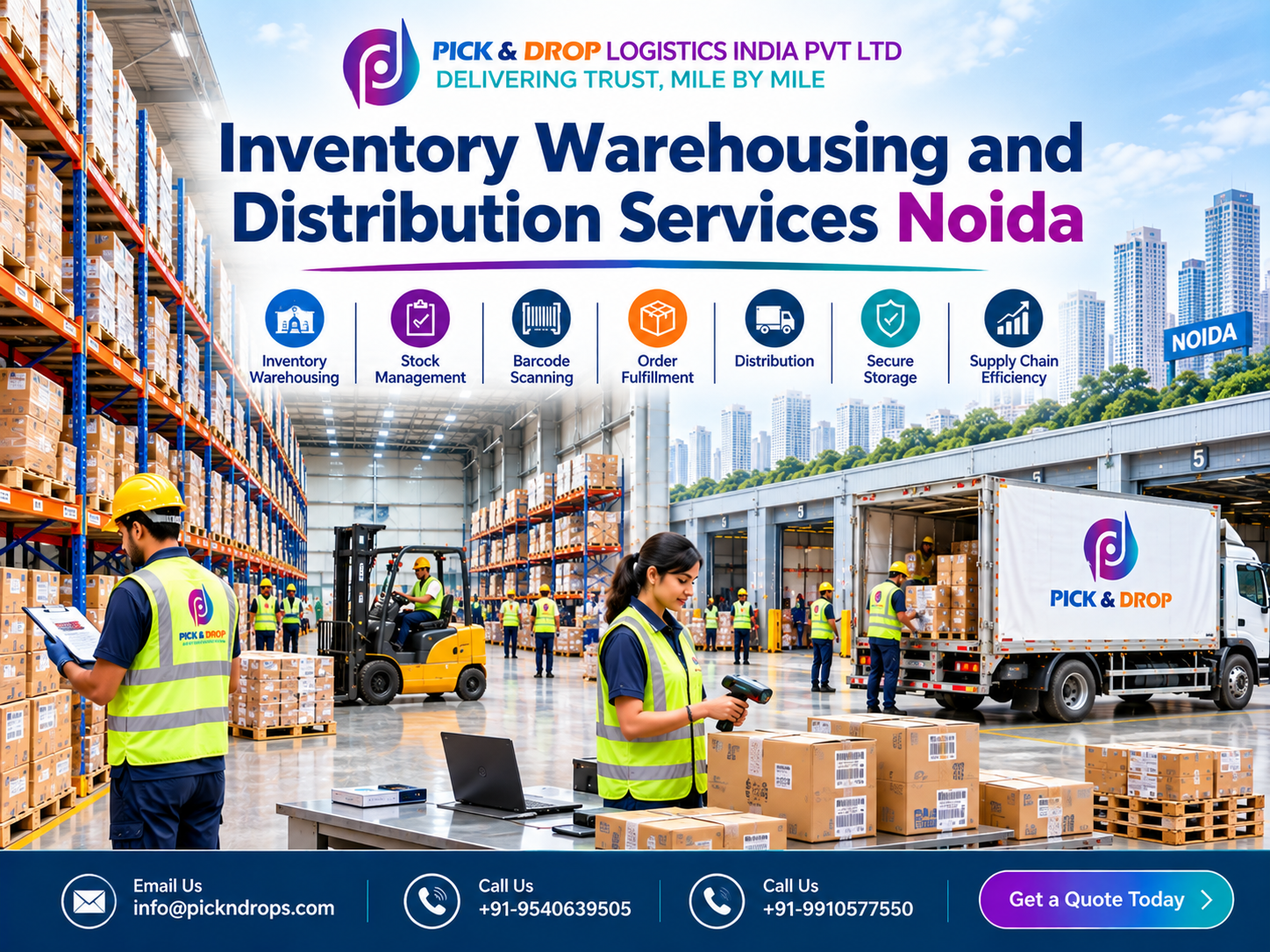
Effective inventory management is a critical function for any thriving business organization. When the amount of goods increases, simple inventory storage alone will not do. It requires effective inventory management, safe warehousing, efficient order processing, and effective logistics support.
Inventory Warehousing and Distribution Services Noida can assist business organizations to align all these critical logistics functions in a structured way. Rather than managing inventory storage and product distribution as separate processes, they can have an integrated process that takes care of everything from receiving through to storage, stock management, order processing, and dispatching.
Whether it is a manufacturing, wholesaling, retailing, eCommerce, or B2B business, the correct warehousing solution can facilitate the process.
What Are Inventory Warehousing and Distribution Services?
Inventory warehousing involves storing and managing products or materials in a structured warehouse environment. Distribution connects that stored inventory with its next destination, such as a customer, retailer, distributor, or business location.
A complete inventory warehousing and distribution process may include:
-
Goods receiving
-
Inventory inspection
-
Product storage
-
Stock organization
-
Inventory tracking
-
Picking and packing
-
Order fulfillment
-
Dispatch preparation
-
Distribution coordination
The exact services available depend on the logistics provider and the requirements of each business.
7 Benefits of Inventory Warehousing and Distribution Services in Noida
1. Organized Inventory Storage
Organization is one of the key benefits of professional warehousing.
There may be hundreds and even thousands of goods, packages, or SKUs in a business that must be stored systematically. The systematic approach to the organization of warehouses will make the locating of goods, as well as processing and order preparation, simpler.
Good organization will also lead to better coordination of work between receiving the inventory and dispatching orders.
2. Better Inventory Management
Inventory management is essential for maintaining control over stock.
A professional warehouse operation can support processes for receiving, recording, storing, and dispatching inventory. Depending on the service arrangement, businesses may also use inventory systems and reporting tools to improve stock visibility.
Better inventory management can help businesses understand:
-
Available stock
-
Incoming inventory
-
Outgoing products
-
Stock movement
-
Product locations
-
Order requirements
This can make everyday inventory decisions more structured and informed.
3. Efficient Order Fulfillment
Warehousing becomes especially valuable when it is connected with order fulfillment.
Once an order is received, the warehouse team can locate the required products, pick the correct items, pack them and prepare them for dispatch.
A structured process can reduce unnecessary movement inside the warehouse and make order preparation more systematic.
This can be particularly useful for e-commerce businesses, wholesalers, retailers and B2B companies that handle regular orders.
4. Smoother Product Distribution
Storing inventory is only one stage of the supply chain. Products also need to reach their intended destinations.
With integrated warehousing and distribution, inventory can move through a connected process:
Receiving → Storage → Inventory Management → Order Processing → Picking → Packing → Dispatch → Distribution
Connecting these stages can help businesses create a more organized movement of products from warehouse storage to customers or business partners.
5. Flexible Support for Growing Inventory
Inventory requirements can change as a business grows.
A company may introduce new products, experience seasonal demand, expand its customer base, or begin serving new markets. These changes can increase warehouse and distribution requirements.
Flexible warehousing services can help businesses adjust their storage and logistics arrangements according to changing operational needs.
This can be useful for growing businesses that do not want to build or manage an entire warehouse operation internally.
6. Reduced Operational Workload
Managing inventory internally can require warehouse space, employees, handling equipment, inventory processes and daily supervision.
Using professional Inventory Warehousing and Distribution Services Noida can allow businesses to outsource selected logistics activities.
This can reduce the operational burden associated with receiving goods, organizing inventory, preparing orders and coordinating distribution.
Business teams can then devote more time to sales, customer service, product development and other core activities.
7. Better Supply Chain Coordination
Inventory, warehousing, and distribution are closely connected.
When these activities are coordinated properly, businesses can create a more efficient supply chain workflow. Inventory can be received and stored systematically, orders can be processed according to requirements, and finished shipments can be prepared for distribution.
This integrated approach can improve coordination between warehouse operations and wider logistics activities.
Who Can Benefit From Inventory Warehousing Services in Noida?
Different types of businesses can use professional inventory warehousing and distribution services, including:
-
Manufacturers
-
Wholesalers
-
Retailers
-
Distributors
-
E-commerce businesses
-
FMCG companies
-
Electronics businesses
-
Consumer goods companies
-
B2B suppliers
-
Importers and exporters
-
Startups
-
Growing businesses
The right warehousing solution depends on product type, inventory volume, SKU count, storage requirements, order frequency and distribution needs.
What Can Inventory Warehousing and Distribution Include?
Depending on the logistics provider, businesses may look for services such as:
Goods Receiving
Receiving incoming products and organizing them for warehouse processing.
Inventory Storage
Storing products in designated warehouse areas according to their type and operational requirements.
Stock Management
Recording inventory movement and maintaining better visibility over stored products.
Picking and Packing
Selecting products against orders and preparing them for shipment.
Order Fulfillment
Managing the warehouse activities required to process and prepare customer or business orders.
Distribution Support
Coordinating the movement of prepared shipments from the warehouse to their intended destinations.
Some providers may also offer additional services such as labeling, kitting, repacking, returns handling, or other value-added activities.
Why Noida Is Suitable for Warehousing and Distribution
Noida is an important commercial and industrial location within the wider Delhi NCR region. Businesses operating in and around the region can use warehousing facilities to organize inventory closer to their operational markets.
The suitability of a particular warehouse depends on factors such as customer locations, transportation routes, inventory volume and distribution requirements.
Businesses should evaluate the warehouse location based on their actual supply chain needs rather than location alone.
How to Choose the Right Inventory Warehousing Service in Noida
Before selecting a logistics provider, businesses should evaluate several important factors.
Storage capacity: Make sure the facility can accommodate current inventory as well as expected growth.
Product handling: Confirm that the warehouse can safely handle the type of products being stored.
Inventory management: Understand how stock is recorded, organized and monitored.
Order fulfillment: Check whether picking and packing services are available if required.
Distribution support: Ask how inventory is prepared and dispatched for delivery.
Flexibility: Consider whether the service can adapt to seasonal or changing inventory volumes.
Communication: Clear communication is important when managing stock and shipment requirements.
Overall value: Compare service quality, flexibility, operational support and cost instead of focusing only on the lowest price.
Why Consider Pickndrops?
Businesses searching for Inventory Warehousing and Distribution Services Noida should look for a logistics partner that can understand their inventory requirements and support the movement of goods from storage through distribution.
Pickndrops can be considered when evaluating logistics solutions for businesses that need coordinated warehousing and distribution support.
A suitable logistics arrangement should provide a structured process for inventory storage, stock handling, order preparation, and dispatch while remaining flexible enough to support changing business requirements.
Build a More Organized Inventory and Distribution Process
Efficient inventory management can have a direct impact on everyday business operations. With professional Inventory Warehousing and Distribution Services Noida, businesses can create a more organized system for storing products, managing stock, fulfilling orders and coordinating distribution.
Whether you are a manufacturer, distributor, retailer, e-commerce company or B2B supplier, the right warehousing solution should match your inventory volume, product requirements and distribution objectives.
Evaluate the available services carefully and choose a logistics approach that provides the right balance of organization, flexibility, operational support and overall value.
Frequently Asked Questions
1. What are inventory warehousing and distribution services in Noida?
These services combine inventory storage, stock management, order fulfillment and product distribution to create a more coordinated logistics process for businesses.
2. Which businesses need inventory warehousing services in Noida?
Manufacturers, wholesalers, retailers, distributors, e-commerce businesses, B2B suppliers, and other companies with significant inventory or distribution requirements can benefit from professional warehousing.
3. How should I choose an inventory warehouse in Noida?
Consider storage capacity, product handling, inventory management processes, fulfillment support, distribution capabilities, flexibility, communication, and overall service value before selecting a warehouse provider.