Best Industrial Warehousing and Distribution Noida 7 Benefits for Businesses
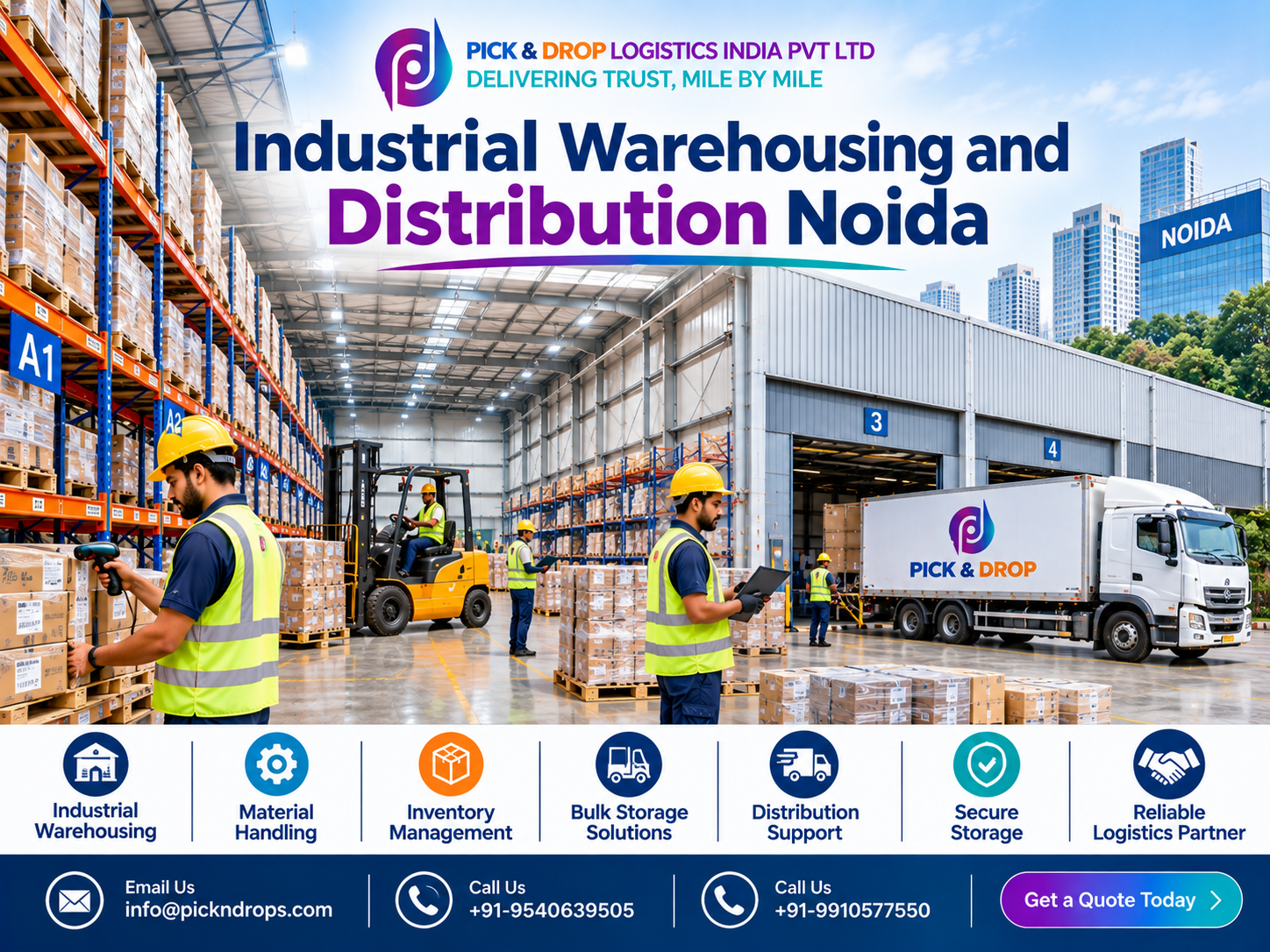
Industrial enterprises need an effective way of storing, organizing their stock, and managing distribution for efficient functioning. Industrial manufacturers, suppliers, and distributors usually have huge amounts of raw materials, components, machinery parts, and finished goods. Proper handling and management of these resources become difficult without the existence of a well-organized warehouse management.
It is here that the role of Industrial Warehousing and Distribution Noida comes into play. With industrial warehousing services, companies can efficiently organize and handle their inventory and ensure the transportation of their goods to the designated places.
Industrial enterprises functioning in Noida as well as the broader area of Delhi NCR would find such a warehousing and distribution system useful.
What Is Industrial Warehousing and Distribution?
Industrial warehousing and distribution refers to the organized storage, handling and movement of industrial goods, materials and products.
It connects warehouse activities with distribution processes so businesses can manage inventory and coordinate product movement more efficiently.
Depending on the logistics provider, services may include:
-
Industrial goods receiving
-
Raw material storage
-
Finished goods storage
-
Inventory management
-
Material handling
-
Stock organization
-
Picking and packing
-
Order processing
-
Dispatch preparation
-
Distribution coordination
The exact services depend on the products being stored, warehouse capabilities and individual business requirements.
7 Benefits of Industrial Warehousing and Distribution in Noida
1. Organized Storage for Industrial Materials
Industrial businesses often manage different categories of materials, components and finished goods. Keeping these products organized is essential for maintaining smooth warehouse operations.
Professional industrial warehousing can provide designated storage areas according to product categories, dimensions, handling requirements and storage conditions.
Organized storage can help businesses:
-
Locate products more easily
-
Maintain systematic stock arrangements
-
Manage incoming and outgoing goods
-
Improve warehouse space utilization
-
Simplify inventory handling
A structured storage system can make industrial inventory management more manageable.
2. Better Industrial Inventory Management
Inventory management is a critical part of manufacturing and distribution operations. Businesses need to maintain visibility over raw materials, spare parts, components and finished products.
Professional warehouse processes can support systematic inventory recording and stock movement management.
Depending on the provider's capabilities, inventory management may include:
-
Recording incoming materials
-
Maintaining stock records
-
Identifying product locations
-
Monitoring inventory movement
-
Managing outgoing goods
-
Preparing stock reports
Better inventory visibility can help businesses make informed purchasing, production and distribution decisions.
3. Efficient Material Handling
The sizes of different items can range greatly. There can be special handling required for some types of materials.
An ideal warehouse for such items should have proper handling procedures for those items.
This would include use of forklifts, pallet handling machines, loading methods, and other things along these lines.
Firms should make sure that the facilities are equipped with proper infrastructure before choosing a particular provider of warehousing services.
4. Smoother Distribution of Industrial Goods
Industrial businesses often need to move products between warehouses, manufacturing facilities, distributors, retailers and commercial customers.
Combining warehousing with distribution support can create a more organized process for preparing and dispatching goods.
A typical workflow may include:
Goods Receiving → Industrial Storage → Inventory Management → Order Processing → Packing → Dispatch → Distribution
This coordination can help businesses manage product movement more systematically and connect warehouse operations with their wider supply chain.
5. Flexible Storage for Changing Business Requirements
Industrial inventory requirements can change according to production schedules, seasonal demand, new projects and business expansion.
A flexible warehousing arrangement can help businesses adjust their storage requirements as inventory volumes change.
For example, a manufacturer may require additional space when production increases or when finished products need to be stored before distribution.
Businesses should discuss storage capacity, contract flexibility and handling arrangements before selecting an industrial warehousing provider.
6. Reduced Warehouse Management Workload
Operating an industrial warehouse internally requires infrastructure, employees, handling equipment, inventory processes and regular supervision.
Outsourcing selected warehousing and distribution activities can reduce some of this operational workload.
A logistics partner may manage agreed activities such as receiving, storage, stock organization, order preparation and dispatch coordination.
This allows businesses to focus more attention on manufacturing, procurement, sales, customer relationships and other core activities.
7. Improved Supply Chain Coordination
Industrial supply chains involve several connected activities, from sourcing raw materials to storing finished products and distributing goods.
When warehousing and distribution are coordinated, businesses can establish a more structured process for managing inventory movement.
A connected logistics workflow can help improve coordination between storage, production requirements, order processing and product distribution.
This is particularly useful for businesses managing multiple product categories, regular shipments or distribution across different markets.
Which Industries Need Industrial Warehousing Services in Noida?
Different industries can benefit from professional industrial warehousing and distribution solutions.
Manufacturing Companies
Manufacturers may require storage for raw materials, components, packaging supplies and finished products.
Automotive and Engineering Businesses
These businesses may need organized storage for spare parts, components, equipment and industrial supplies.
Electronics Companies
Electronics businesses may require suitable storage arrangements for products, accessories and components according to their handling requirements.
FMCG and Consumer Goods Companies
Businesses dealing with consumer products may require inventory storage, order preparation and distribution coordination.
Industrial Suppliers
Suppliers handling equipment, materials and commercial products can benefit from structured warehouse storage and dispatch processes.
Wholesalers and Distributors
Wholesale businesses often manage large product quantities and regular distribution requirements, making organized warehousing an important operational requirement.
What Services Should You Look for in an Industrial Warehouse?
Before selecting Industrial Warehousing and Distribution Noida, identify the services that match your business requirements.
Goods Receiving: Organized receiving and recording of incoming industrial products and materials.
Industrial Storage: Designated storage arrangements for raw materials, components and finished goods.
Inventory Management: Stock recording, identification and inventory movement monitoring.
Material Handling: Appropriate equipment and processes for moving and handling stored products.
Order Processing: Preparation of goods according to business orders and dispatch requirements.
Picking and Packing: Selecting products and preparing them for shipment.
Distribution Support: Coordination of product movement from the warehouse to business destinations.
Not every warehouse offers all these services. Confirm the service scope, infrastructure and handling capabilities before making a decision.
How to Choose the Right Industrial Warehousing Company in Noida
Selecting an industrial warehouse requires careful evaluation because different products have different storage and handling requirements.
Consider these important factors:
-
Warehouse capacity: Check whether the facility can accommodate your current and expected inventory volumes.
-
Storage suitability: Confirm that the warehouse is appropriate for your product categories and storage conditions.
-
Material handling: Evaluate the equipment and procedures available for handling your goods.
-
Inventory management: Understand how stock is recorded, organized and monitored.
-
Distribution support: Check how products are prepared and coordinated for dispatch.
-
Security and safety: Review access controls, fire safety arrangements and warehouse operating procedures.
-
Location: Consider accessibility to manufacturing units, suppliers, customers and transportation routes.
-
Cost transparency: Understand storage charges, handling fees, additional costs and contract conditions.
Choosing a provider based on operational suitability and service quality can deliver better long-term value than focusing only on the lowest price.
Why Consider Pickndrops for Industrial Warehousing and Distribution?
Businesses searching for Industrial Warehousing and Distribution Noida should evaluate logistics providers based on their storage infrastructure, inventory processes, handling capabilities and distribution support.
Pickndrops can be considered when comparing logistics solutions for industrial storage and distribution requirements.
A suitable logistics arrangement should support organized inventory management, systematic warehouse handling, order preparation and coordination between storage and distribution activities.
Before finalizing a service, discuss your product type, storage volume, handling requirements, order frequency and distribution destinations to identify the most appropriate solution.
Improve Your Industrial Logistics With Professional Warehousing
Industrial businesses need an organized approach to storing materials, managing inventory, and distributing products. The right Industrial Warehousing and Distribution Noida solution can help companies improve warehouse organization, manage stock movement and coordinate distribution more efficiently.
Whether you operate a manufacturing unit, industrial supply business, wholesale company or distribution network, professional warehousing can become an important part of your supply chain strategy.
Explore Pickndrops' logistics solutions and evaluate the services that best match your industrial storage and distribution requirements.
Frequently Asked Questions
1. What are industrial warehousing and distribution services in Noida?
These services involve storing, managing, handling and distributing industrial goods, raw materials, components and finished products through organized warehouse and logistics processes.
2. Which industries need industrial warehousing services?
Manufacturing, automotive, engineering, electronics, FMCG, industrial supply, wholesale, and distribution businesses can benefit from industrial warehousing solutions.
3. How do I choose an industrial warehouse in Noida?
Evaluate warehouse capacity, storage suitability, material handling equipment, inventory management, security, distribution support, location and overall service value before selecting a provider.